
The Five Eyes' horrific view of Iran
Responses to the US-Israeli crime of aggression against Iran place Five Eyes member states among the most dangerous countries on Earth.

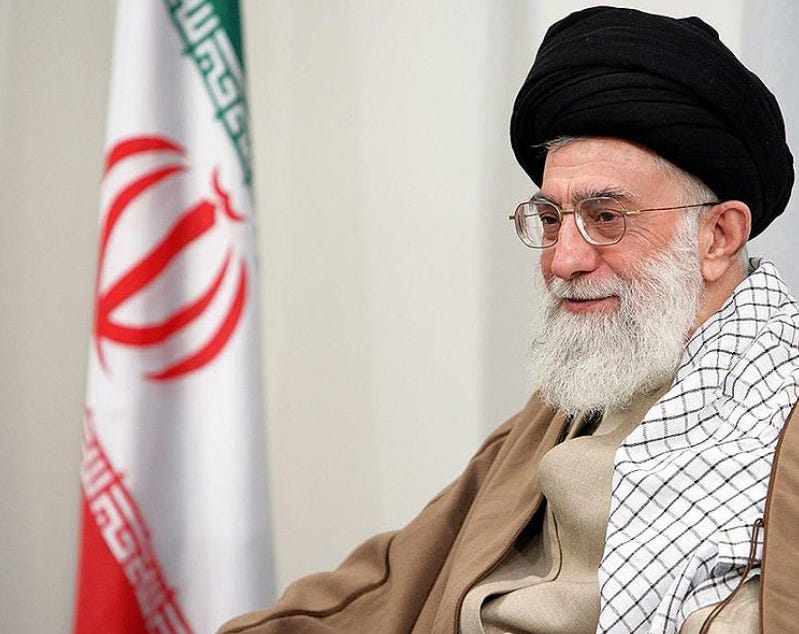
The West’s reaction to a joint Israel-US act of aggression against Iran has revealed once again how selectively it treats international law and that its Five Eyes member states are among the most dangerous countries on Earth.
The unprovoked attack on February 28 (NZT) involved hundreds of Tomahawk missiles launched from US warships, while US stealth fighters and drones joined a reported 200 Israeli fighter jets in targeting 500 sites across Iran.
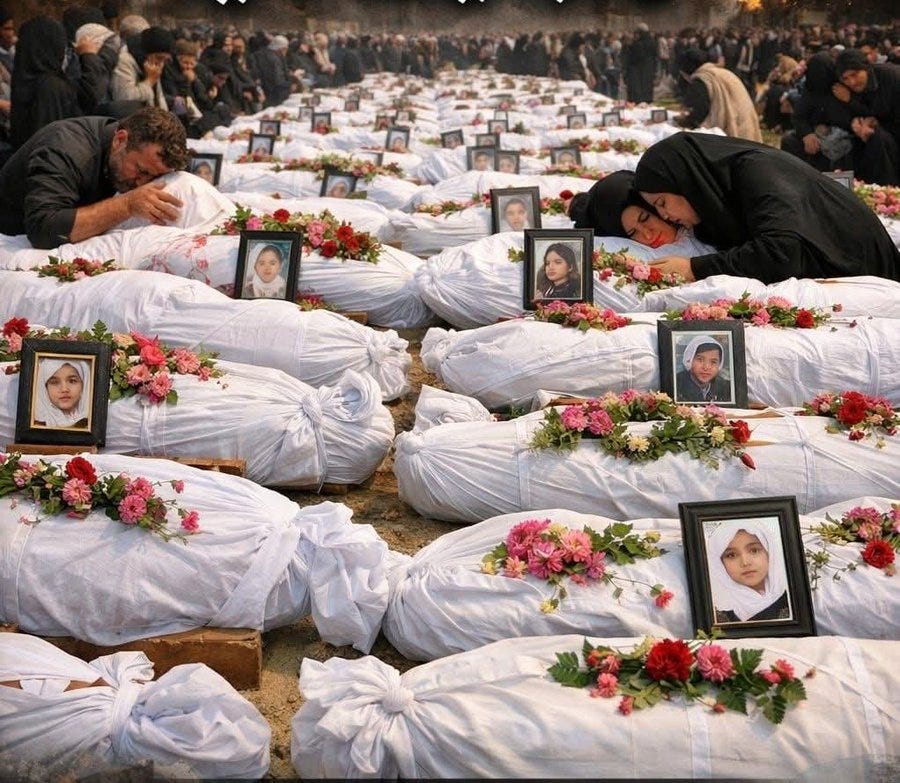
The first day of the obscenely-named Operation Epic Fury killed top Iranian military and political leaders, including Supreme Leader Ali Khamenei, as well as civilians, including 165 girls when their school was bombed in the city of Minab in Hormozgan Province.
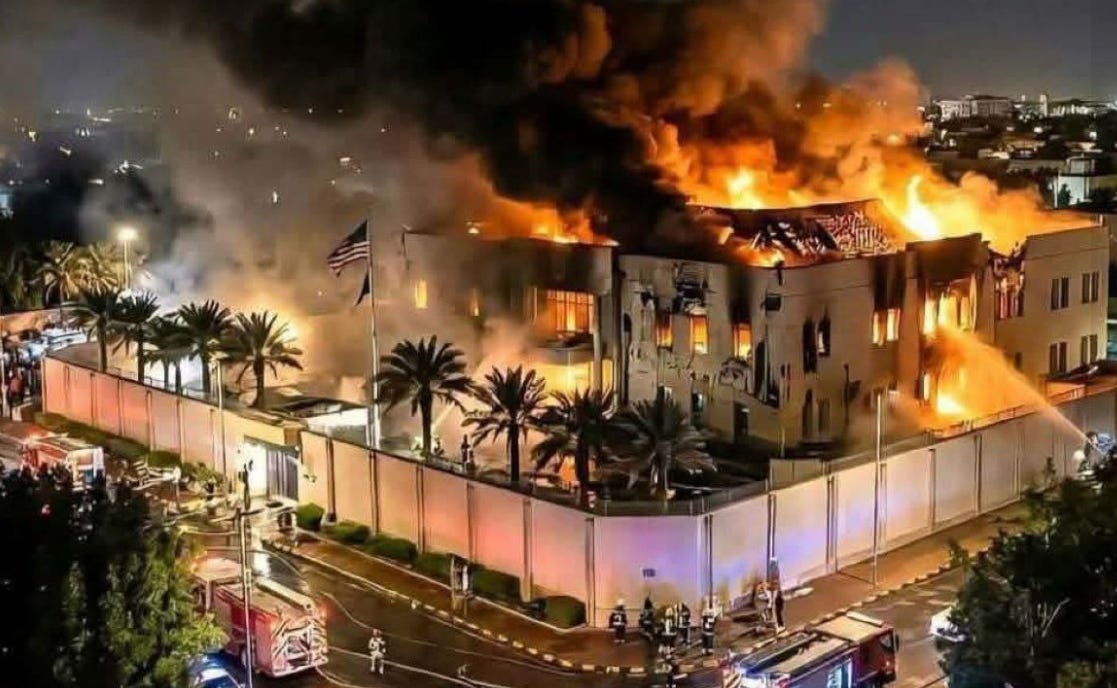
Iran’s overwhelming counterattack has included targeting dozens of US bases located in every neighbouring Gulf state, closing the Strait of Hormuz after attacking ships carrying oil, and directing sustained waves of missiles and drones to targets in Israel.
In doing so, Iran is exercising an inherent right to defend itself, as Iran’s Foreign Minister Abbas Araghchi told an incredulous ABC news anchor. The right is affirmed by Article 51 of the United Nations Charter.
The joint Zionist forces had declared the actions “pre-emptive”, claiming Iran was about to launch an attack against Israel, without offering any credible evidence. At the time of the attacks, Iran’s negotiators were engaged in talks with US special envoys Steve Witkoff and Jared Kushner in Geneva over the future of its nuclear program. The talks, mediated by Oman, had been reported as close to a breakthrough, with assurances over no stockpiling of nuclear materials being given by Iran.
It was the second time such talks were used as cover to attack Iran. In June last year, amid similar diplomatic efforts to resolve tensions over Iran’s nuclear activities, Israel attacked the Islamic Republic. The US ended that so-called Twelve Day War by bombing three nuclear sites in Iran. The Trump administration deemed these destroyed, accounting for why many saw the renewed nuclear concern by the US as part of a pretext for attacking the country. Khamenei had forbid the development of a nuclear weapon on religious grounds for decades.
Five Eyes statements
The most vociferous defenders of the aggression were those states attached to the US-led Five Eyes intelligence network, which is also made up of the UK, Canada, Australia and New Zealand. The Anglosphere countries cooperate closely on signals intelligence, surveillance and national security.
The countries’ responses to Operation Epic Fury were so similar in language it suggested all were individually crafted from a US boilerplate statement. It points to fact the Five Eyes is not simply a security pact, but an arrangement imposing foreign policy obligations on members states superseding their UN obligations.
All statements backed the aggression, justifying it by claiming Iran was a source of instability and terrorism, that it sought nuclear weapons and that it had killed thousands of its own citizens during protests in January.
UK Prime Minister Keir Starmer on March 1 backed the US-Israel attack and revealed that British military aircraft were assisting with “defensive operations”. The UK is allowing the US to use its bases in Cyprus, giving material support to the war of aggression. The other Five Eyes partners are also suspected of giving military assistance and the extent of any involvement will inevitably become clearer in the weeks and months ahead.
A statement by New Zealand Prime Minister Christopher Luxon and Foreign Minister Winston Peters said the attack was “designed to prevent Iran from continuing to threaten international peace and security”.
“We recognise too the courage of the Iranian people who have taken to the streets in recent weeks to demand change, only to be met by violence and murder,” it said. “The Iranian people must be allowed to determine their future.”
The statement condemned “in the strongest terms Iran’s indiscriminate retaliatory attacks” against Gulf states.
Far from being indiscriminate, Iran’s attacks have been focused on dozens of US bases located in the jurisdictions of the family dictatorships installed by the West. Notable targets hit include the US Fifth Fleet naval base in Bahrain, the Al-Udeid Air Base in Qatar, the Ali Al-Salem Air Base in Kuwait and the Al-Dhafra Air Base in the United Arab Emirates.
Peters, like his other Western counterparts, called for a “resumption of negotiations and adherence to international law” so that Iran returned to “the community of nations”.
The day before Peter’s statement, Australia’s Anthony Albanese released probably the most venal of the statements. Welcoming the attack, he repeated Iranian protest atrocity propaganda, as well as listing unsubstantiated claims made by the Australian Security Intelligence Organisation (ASIO) that Iran was behind several attacks on Jewish property in Australia in 2024.
Canadian Prime Minister Mark Carney repeated the same formula of words, calling Iran “the principal source of instability and terror throughout the Middle East”, while also backing “Israel’s right to defend itself”.
Carney was lauded by some for calling out the hypocrisy and neo-colonial nature of the post-war rules-based order at the World Economic Forum in Davos in January, where he pointed out politicians had been “living within the lie” because it suited their Western countries. Over the weekend, he found himself within that same lie, stating that his country “stood with the Iranian people” - diplomatic code for backing regime change.
The comments revealed Carney’s insight came without capacity. His statement reeked of hypocrisy - of imperialism thinly packaged in the tatters of Western human rights and universal values he had previously critiqued.
European leaders were less epistemically violent, but just as evasive and disingenuous, with EU bureaucrat Ursula von der Leyen, German Chancellor Friedrich Merz and French President Emmanuel Macron keeping their criticism directed against Iran’s defensive military response.
Merz called the counterstrikes “unjust” and “harsh” and said it “was not the time to lecture partners and allies”.
EU chief foreign policy diplomat Kaja Kallas condemned “the Iranian regime’s indiscriminate attacks against its neighbours,” which she said carried “the risk of dragging the region into a broader war”.
In the inverted world of Western leadership, cause and effect no longer hold any meaning in diplomacy, while official propaganda positions are adhered to regardless of how ridiculous these may sound.
They live in a pathological environment where indoctrination through media and academia feeds on fear and orientalist prejudice, affecting the public’s ability to discern truth and meaning.
Much of the Five Eyes statements also relied on such ignorance.
Regime change playbook
For months, Western publics have been fed a simplistic narrative of good versus evil, authoritarianism versus liberal democracy, as Iran faced down violent street protests in January, violence orchestrated by Western intelligence agencies, including Mossad and the CIA.
The evidence for this is already out in the open. US and Israeli officials have admitted Mossad operatives were on the ground during the protests. The head of CIA’s regime change arm, National Endowment for Democracy (NED), Damon Wilson, told a Congressional hearing last week (February 24) his organisation had brought hundreds of Starlink units into the country.
The US had for several months exerted maximum pressure to choke off Iranian revenue, plunging the rial into a severe, sustained collapse. The currency crisis led to the protests. Hundreds of police and civilians were killed by suspected agent provocateurs, sparking an Iranian crackdown. The death toll figures remain greatly contested.
The chaos was similar to manufactured protest violence seen in the run-up to the coup attempt on Venezuela’s leader Hugo Chavez in 2002 and the Maidan Square violence that preceded the ousting of Ukraine’s President Viktor Yanukovych in 2014. It is reasonable to presume the orchestrated violence was an attempt to spark civil conflict and soften the country up for regime change.
The US and Israel would have hoped to attack the country while it was in serious internal chaos. However, the Zionist forces underestimated the country’s social cohesion and the state’s ability to resist foreign interference. Iran shut down the internet, while its security forces employed technology to track Starlink units used by suspected foreign intelligence agents.
The US is seeking to install a puppet regime under the “interim” dictatorship of Reza Pahlavi, son of the late Shah, who resides in Washington, DC. Pahlavi’s father, Mohammad Reza Pahlavi, had been installed after a military coup orchestrated by Britain’s MI6 and the CIA in 1953, overthrowing the democratically-elected and secular government of Mohammad Mosaddegh. Under Mosaddegh, the country’s oil industry was nationalised, much to the chagrin of British Petroleum (BP), which took control of the sector after Pahlavi’s instalment.
The Five Eyes statements decontextualised and reframed the situation as simply the unbridled use of violence by an Islamic dictatorship to crush popular dissent. Western media did little to challenge the narrative and everything to amplify it, as indeed have many left-leaning liberal critics of the US-Israeli aggression.
The Islamic Republic’s support for Palestinian liberation and its backing of other anti-imperialist groups in the region, as part of a Shia liberation theology praxis, was likewise reframed as support for terrorism.
Resource wars and Greater Israel
The Five Eyes nations’ backing for the aggression reflects deep entanglement with a US regression to old school colonial conquest and occupation, as outlined by US secretary of state Marco Rubio at Munich Security Conference last month.
To the cheers of European leaders, Rubio lamented the loss of Western empires and urged its allies to unapologetically join it in rebuilding Western dominance.
He said: “We do not want our allies to be shackled by guilt and shame. We want allies who are proud of their culture and of their heritage, who understand that we are heirs to the same great and noble civilization.”
The Five Eyes nations’ statements were certainly not shackled by guilt or shame.
These states have once again categorically rejected genuine multilateralism and international law, as they had throughout the Gaza genocide. The ‘rules-based order’, supposedly based on the United Nations Charter and its institutions, has been exposed time and again as a liberal ideological construct, part of the Western empire’s false self, its pathological lies hiding exploitation, entitlement and an extractive relationship with the rest of the world. They are part of a lawless imperialism now exerting itself more openly across the globe.
The aggression waged against Iran is part of 21st century resource wars, envisaged many decades ago by thinktank hawks and critics alike. Iran also stands in the way of a Greater Israel, an expanded Zionist territory upholding US hegemonic interests in the region, which would involve further displacement, murder and a more decisive lurch towards totalitarianism within the West, as those protesting foreign policy face increasing state repression.
Iran’s fall to US regime change would be a major blow to China, which relies on its oil imports, and neighbouring Russia, another BRICS ally that has also signed multiple co-operation agreements across commerce, science and military spheres in recent years. The development of a peaceful multipolarity itself would suffer a setback.
The war triggered by US-Israeli aggression may now have immediate implications for the West. With the Strait of Hormuz partially blocked, energy prices are expected to rise substantially and with it inflationary pressures. It will intensify the prolonged cost of living crisis that has caused misery to millions across the Western Hemisphere. It will once again underline the contradictions inherent in aligning with a hegemonic power that can only maintain its primacy by perpetuating imperial wars and global instability.
Brilliant analysis Mick, it gathers up everything I have read in the last few months and puts it in an easy to read piece. We in the west can no longer call ourselves the good guys.
The Zionist governments have never been the good guys. They are nothing but colonizers and oppressors of the worst kind pretending to be freedom fighters.
The United States and its allies are hypocrites acting like they care about the Iranian people, Trump doesn’t give a damn about his own people and the rest are anti Muslim.